
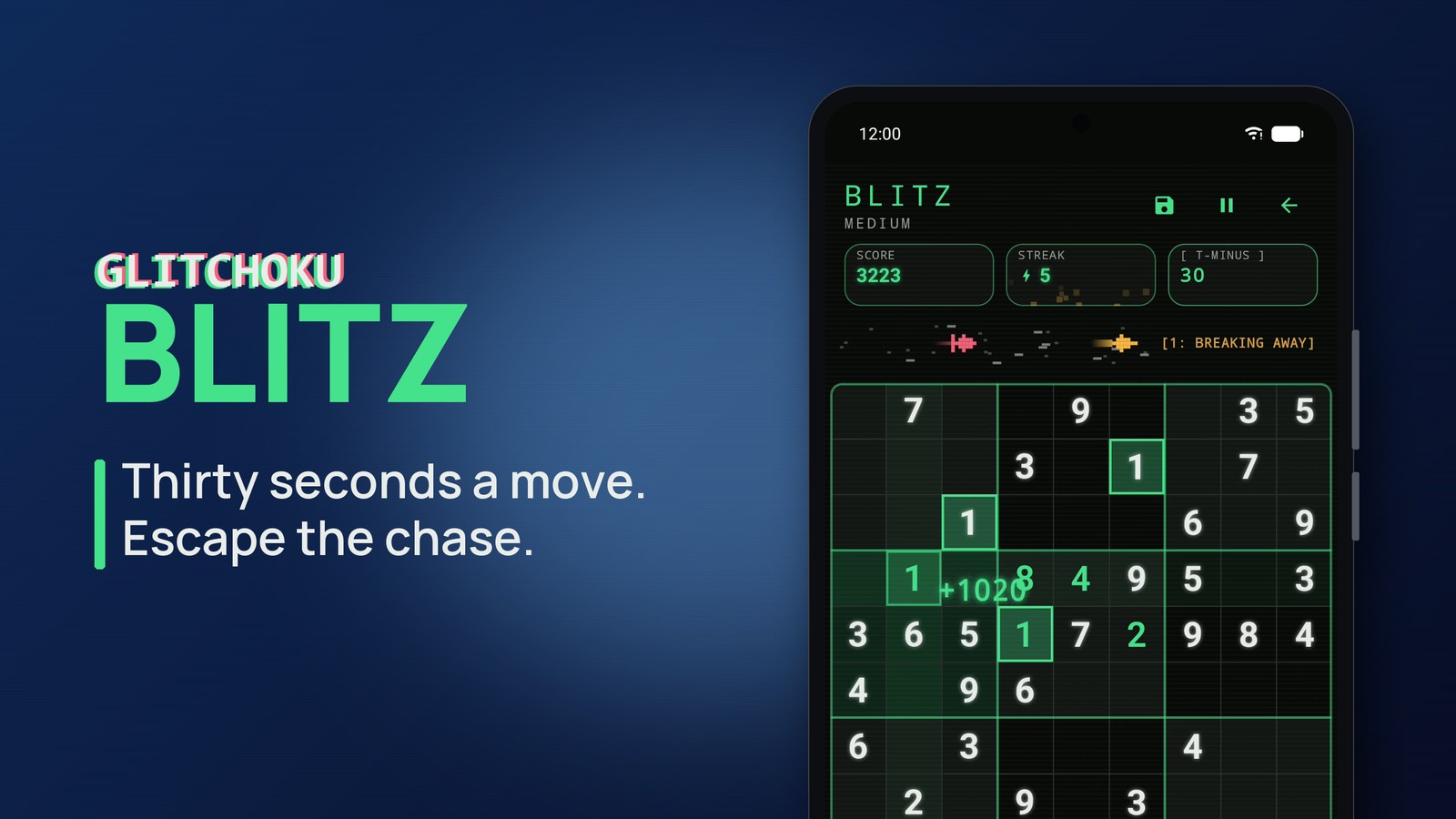
Blitz is sudoku with a short fuse. Every move gets thirty seconds, and the run is a chase: each slip lets it close in, and every clean streak pulls you clear.
It is one of the ways to play Glitchoku, our sudoku game for Android. The board is ordinary 9×9 sudoku with exactly one solution and no guessing required. Blitz asks how quickly and how cleanly you can solve it.
Thirty seconds a move
Each move has its own thirty-second clock. A correct digit resets it. So does running out of time, although that counts as a miss. A wrong digit doesn’t reset it: you keep whatever was left, so a deliberate wrong guess can’t buy a fresh thirty seconds.
The chase
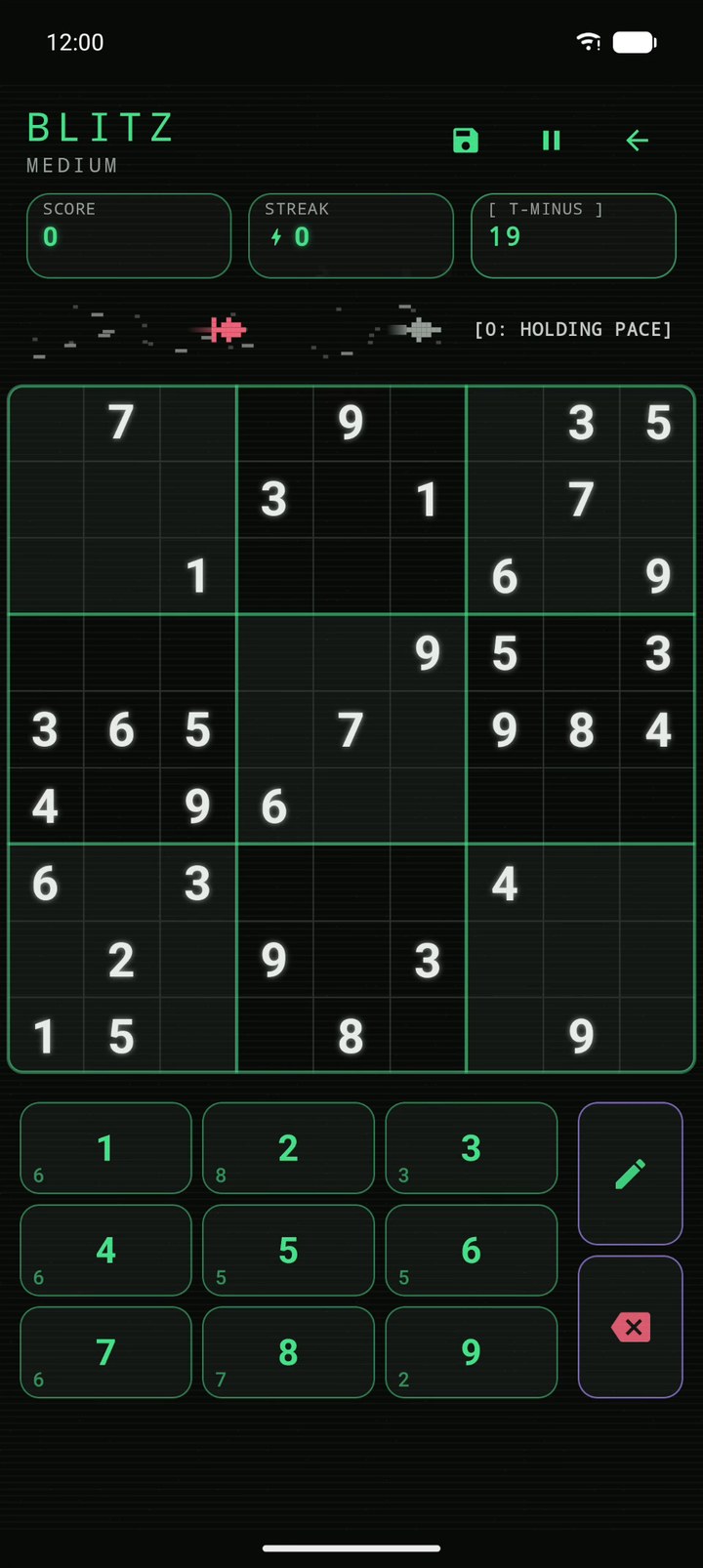
Above the board runs a slim band that shows the gap between you and the chase. It starts level, at Holding pace.
- Every wrong digit and every timeout lets the chase close one step.
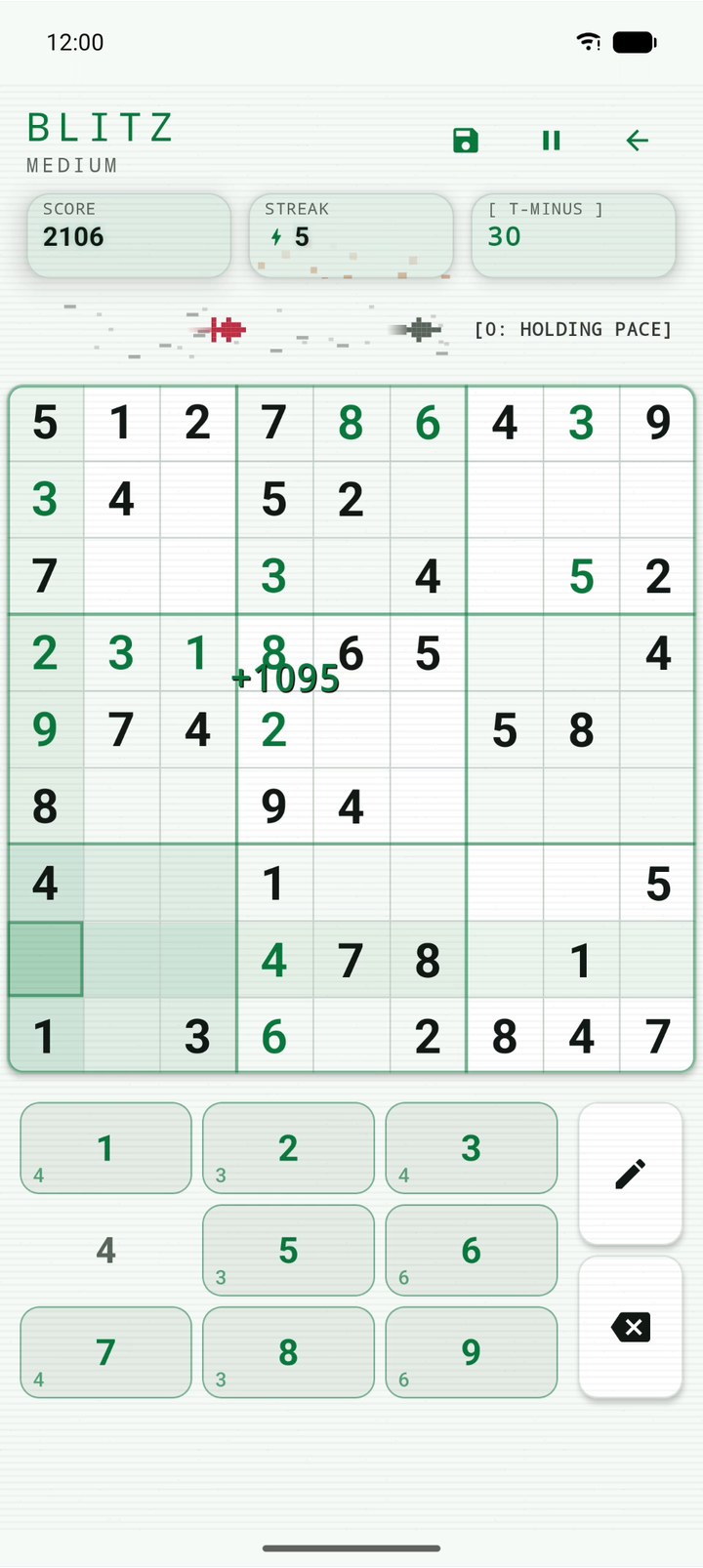
- Five correct digits in a row pull you one step clear. That is the only way to gain ground.
- Let it close three steps from level and the run is over.
Going ahead shows Breaking away, and falling behind shows Closing in. You can build a lead of up to five steps. From level, three misses in a row end the run. From five steps clear, it takes eight. On Expert, a miss while you are ahead costs two steps instead of one, so a lead goes faster there.
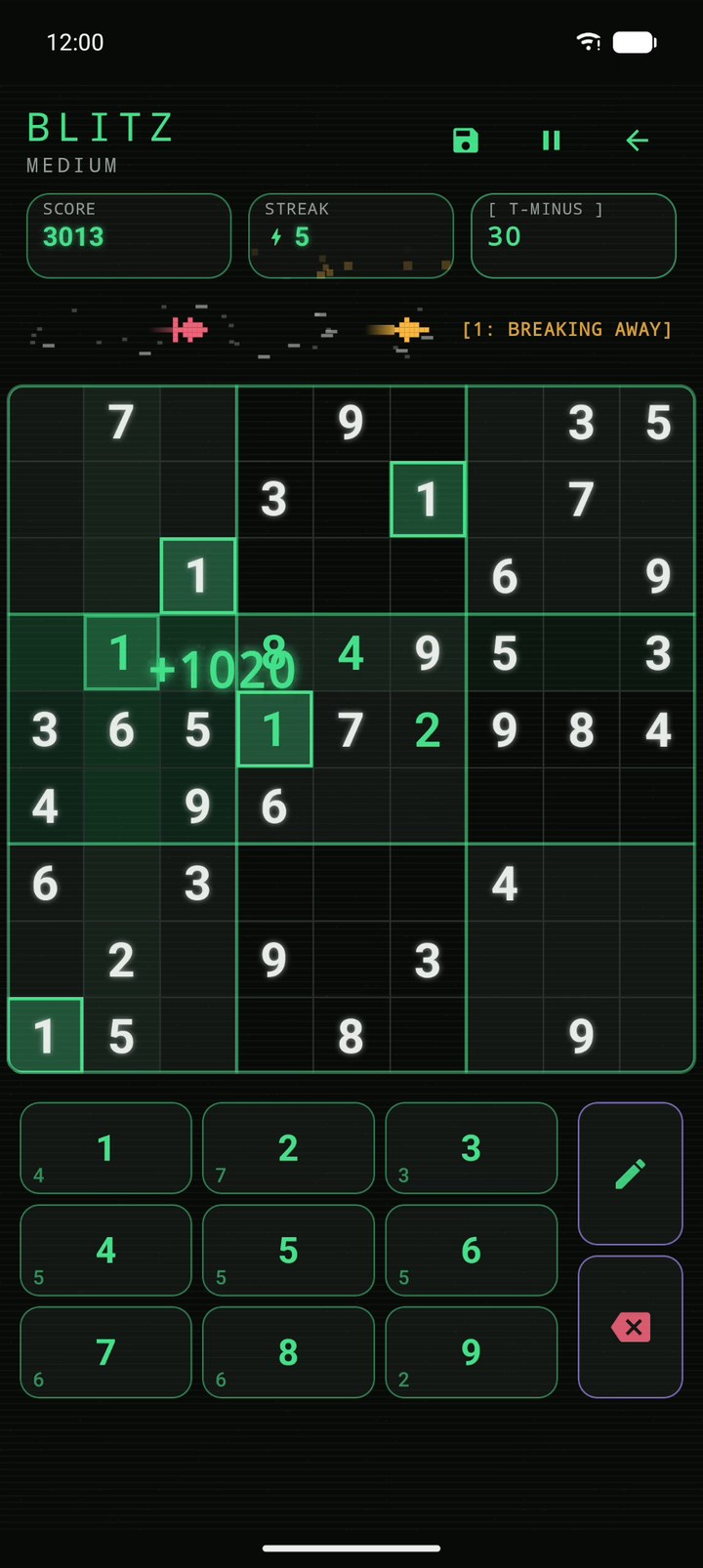
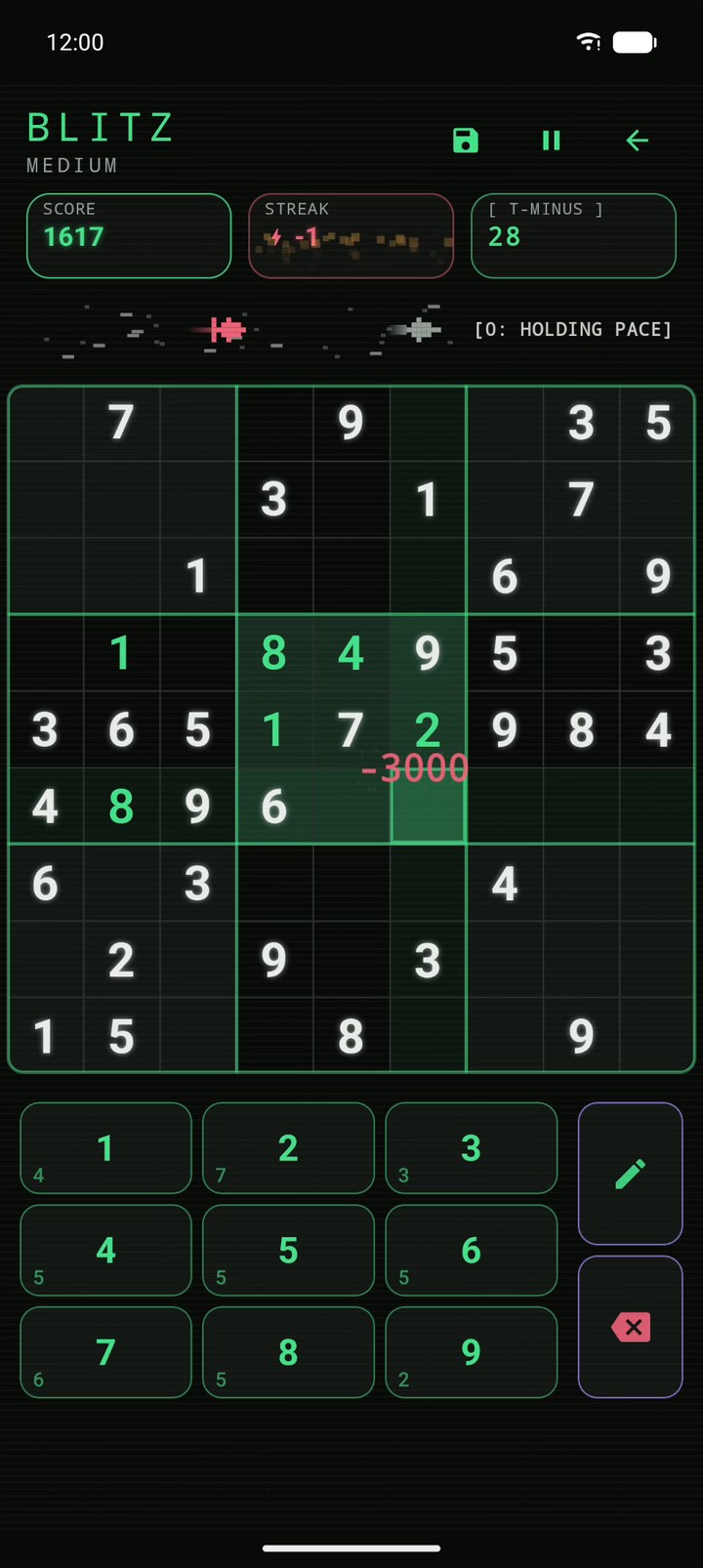
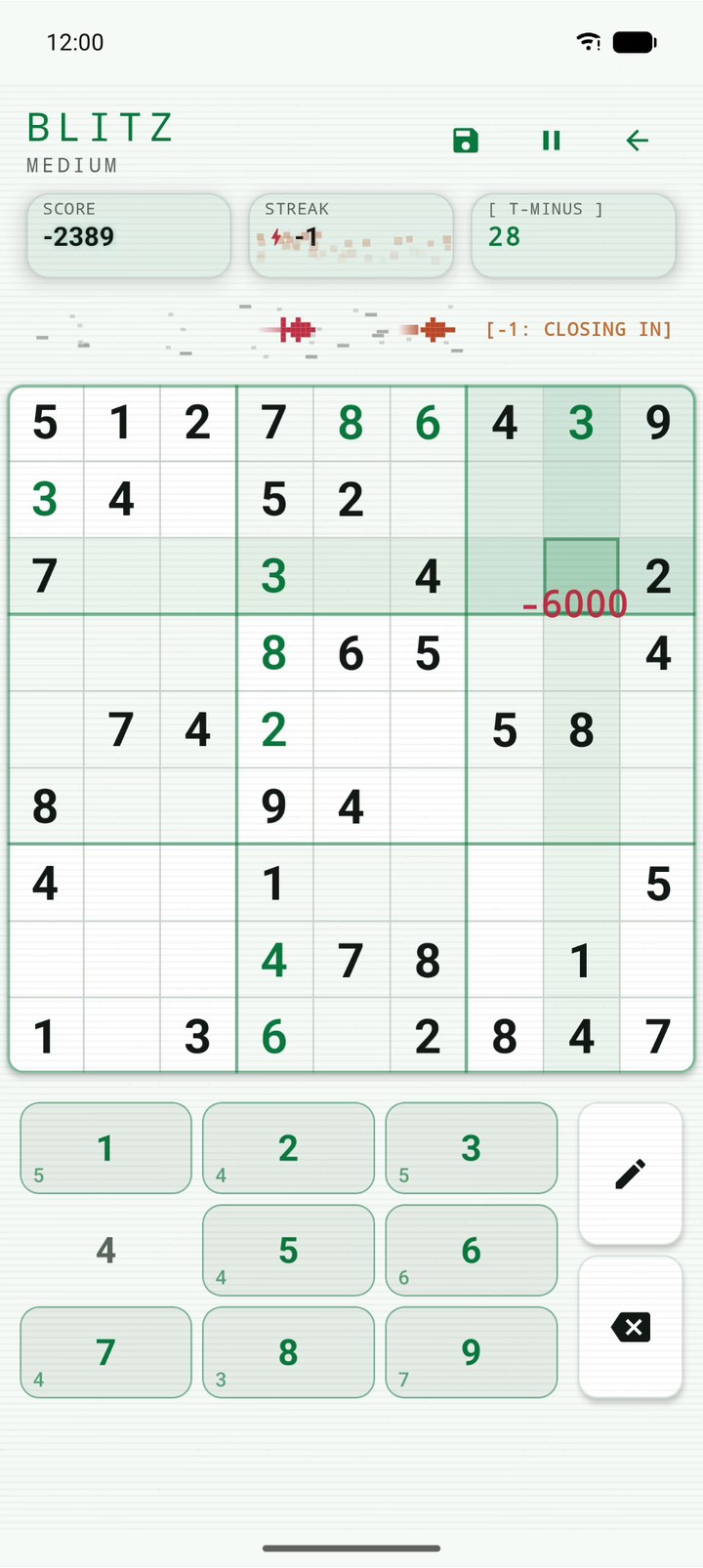
Because recovering a step takes five correct digits and losing one takes a single miss, you can’t guess your way through a Blitz board. Guessing is survivable if you can solve, and it is not survivable if you can’t.
How Blitz scores
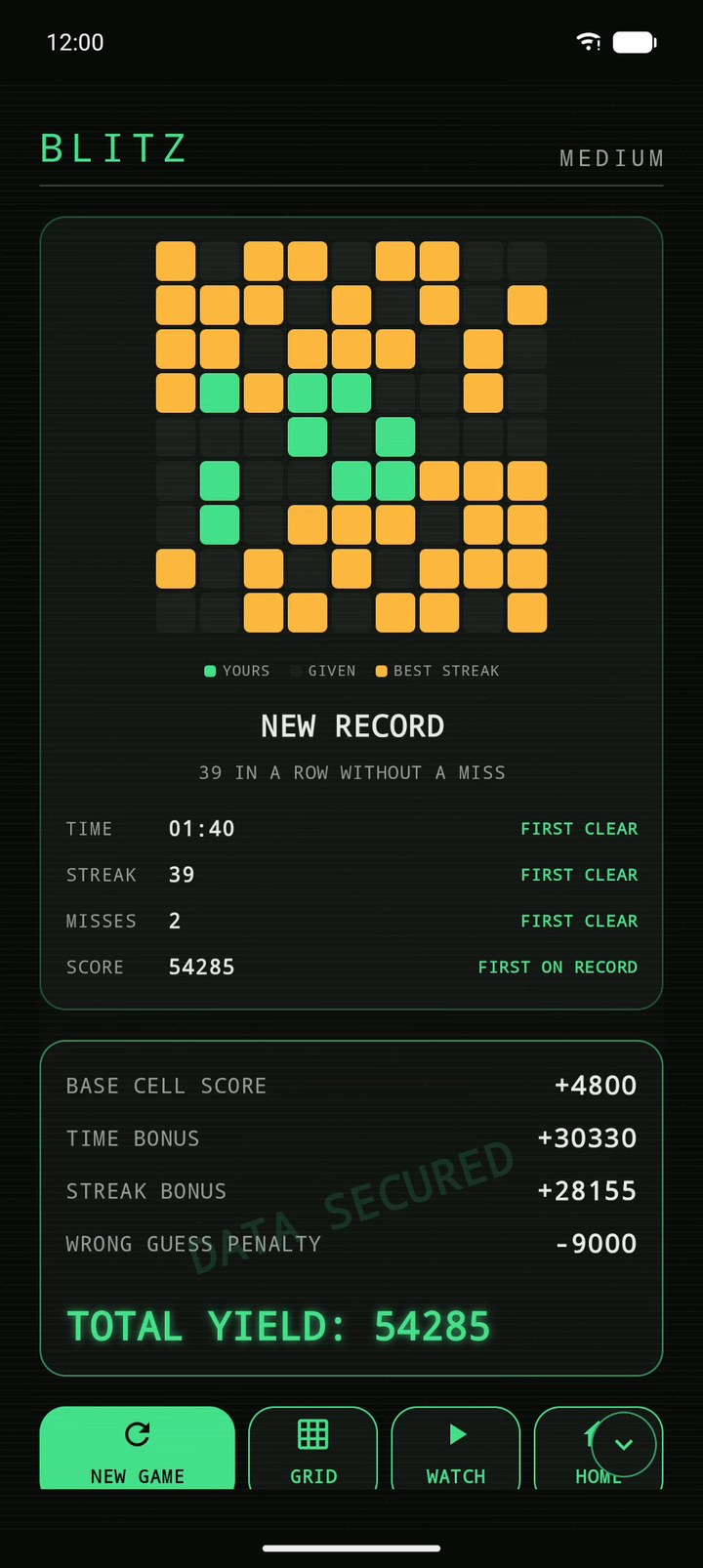
Every correct digit scores 100 points, plus a bonus for pace. Pace is your average seconds per cell over the last 90 seconds of play, so it rewards steady speed rather than one lucky fast tap. Every second under 30 seconds a cell adds 10 points, and every second under 12 adds a further 40.
That total is multiplied by your streak: ×1.1 for one correct in a row, up to ×2.0 at ten or more. A miss resets the streak.
Mistakes cost points as well as ground. The first wrong digit costs 3,000 points, the second 6,000, and every one after that 9,000. A timeout costs nothing while you are level or ahead, and 3,000 once you are behind. The score can go negative, but a negative run doesn’t count as a record.
A few tips
- Use the whole thirty seconds when you need to. A timeout costs a step, but a wrong guess costs a step and thousands of points.
- Protect the streak. It multiplies every digit, and every fifth one earns back ground.
- Bank a lead early. A few steps in hand is what lets you take your time on the one hard cell later.
- Keep moving. Pace is measured over the last minute and a half, so a steady rhythm beats bursts and pauses.
Every difficulty, and a record for each
Blitz runs on all four Glitchoku difficulties: Easy, Medium, Hard and Expert. Each tier is set by the solving techniques a board really needs. Expert stays locked until you have finished three Hard boards in Blitz. Your best runs are kept per difficulty in Mission Records, with a move-by-move replay of each.


Glitchoku is fully offline, with no ads and no sign-up. Read more in our launch post, or see the other modes: Glitchoku Overclock and One Shot.