
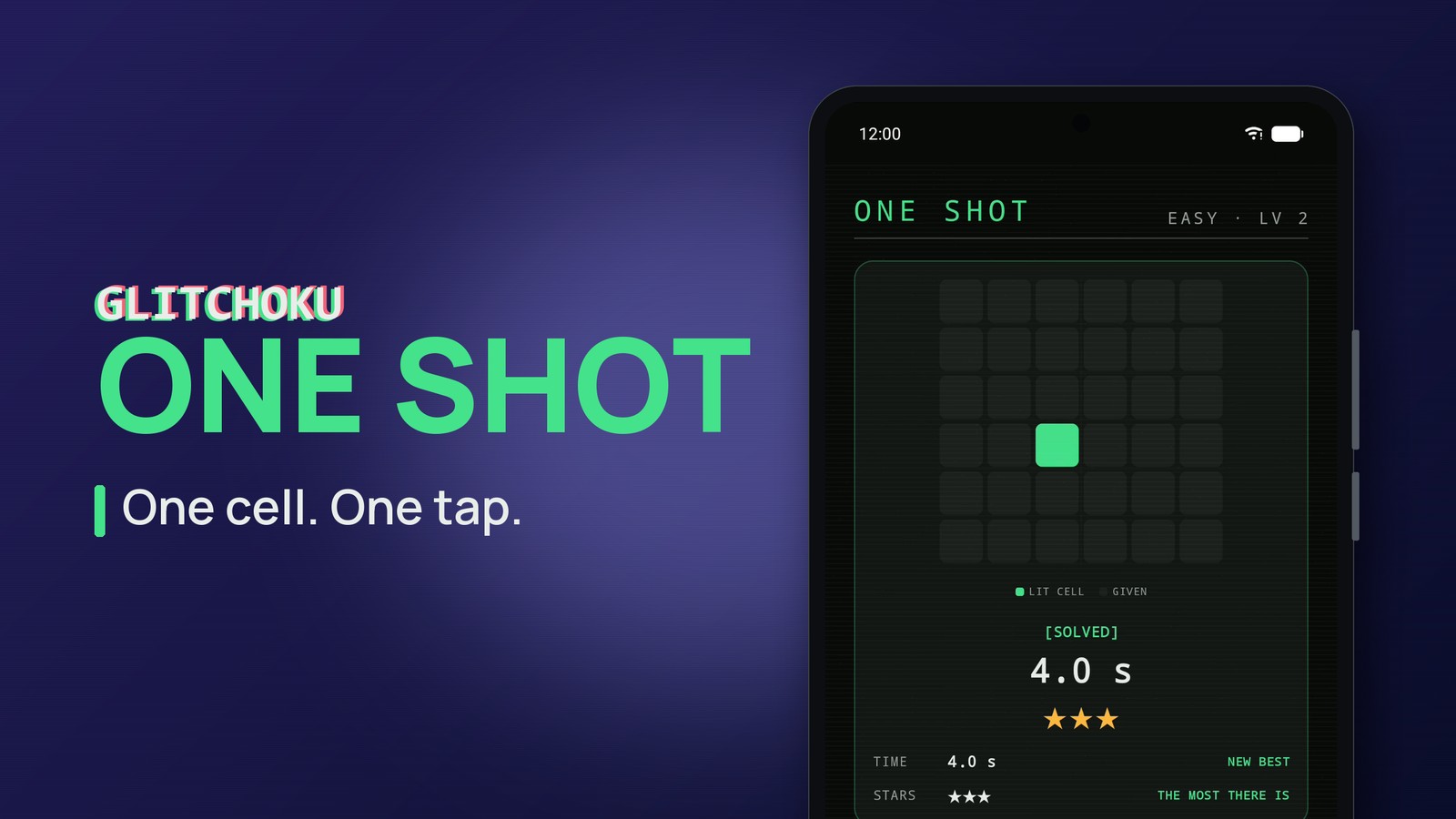
Sometimes you have a minute, not twenty. One Shot is sudoku for that minute: one board, one lit cell, one digit to find.
It is the newest way to play Glitchoku, our sudoku game for Android, and it arrived in version 1.14.1. Every board holds just enough to know the lit cell. Work out its digit, tap it, and the board is done.
One cell, one tap
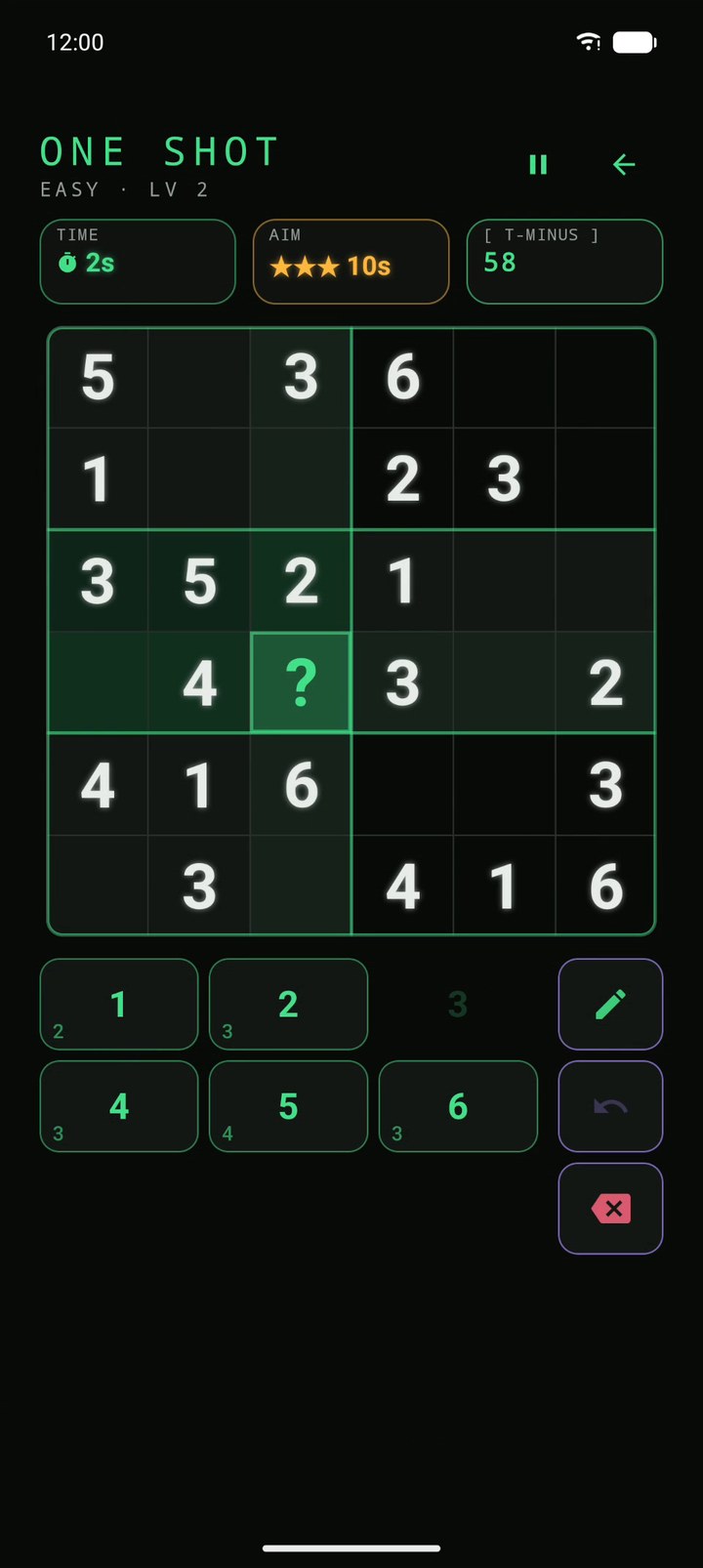
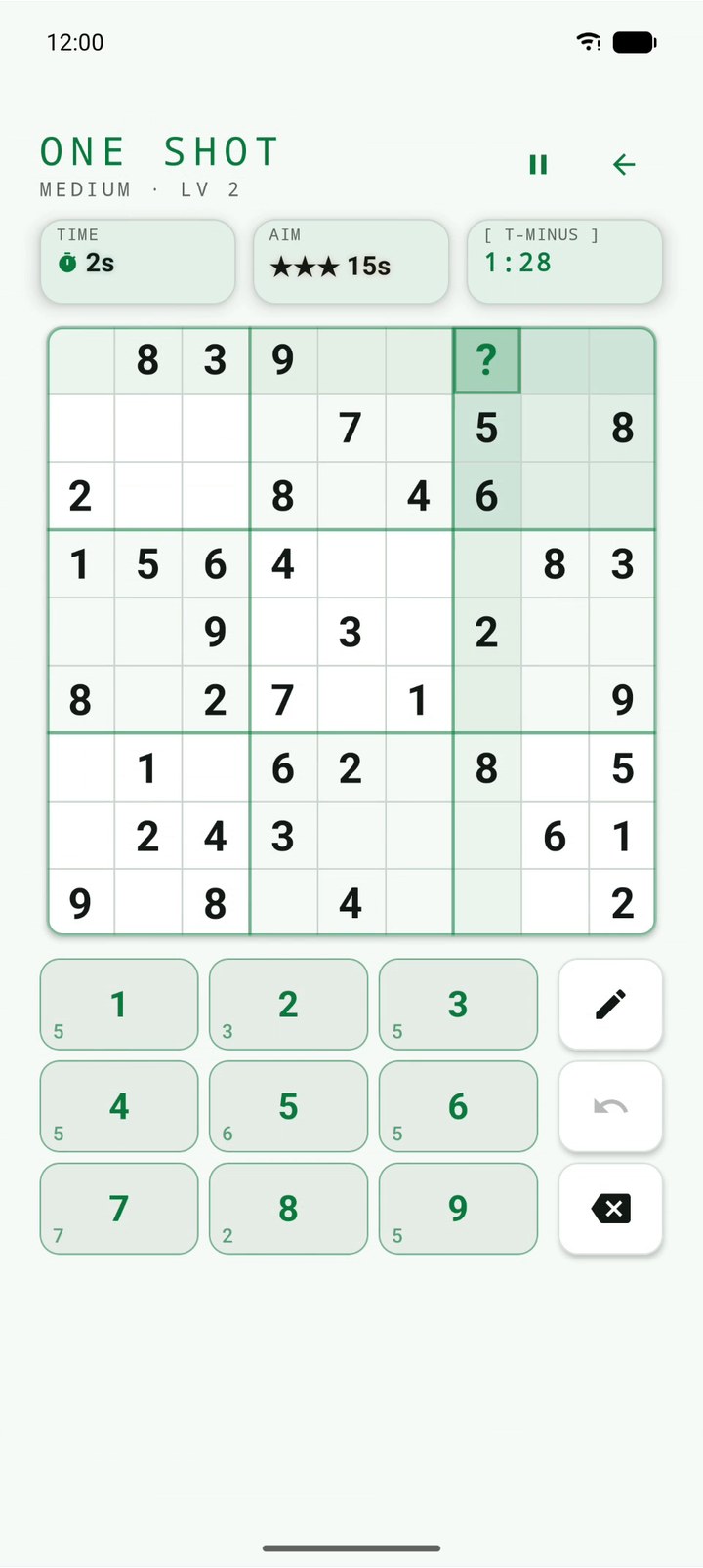
A One Shot game is a single board with one cell lit. The right digit wins the board, and a wrong digit or running out of time loses it. There are no second tries on the same board.
The board tools are the same as in every other Glitchoku mode, so you can pencil in notes, try working digits in other cells and undo while you think. Only a digit typed into the lit cell counts as your answer.
Stars for speed
Each board is scored by how quickly you solve it, with up to three stars. On an early Easy level, solving within 10 seconds earns three stars and within 20 seconds earns two. The thresholds and time limits grow with the board: a Medium 9×9 gives you longer.
A map of fifty levels
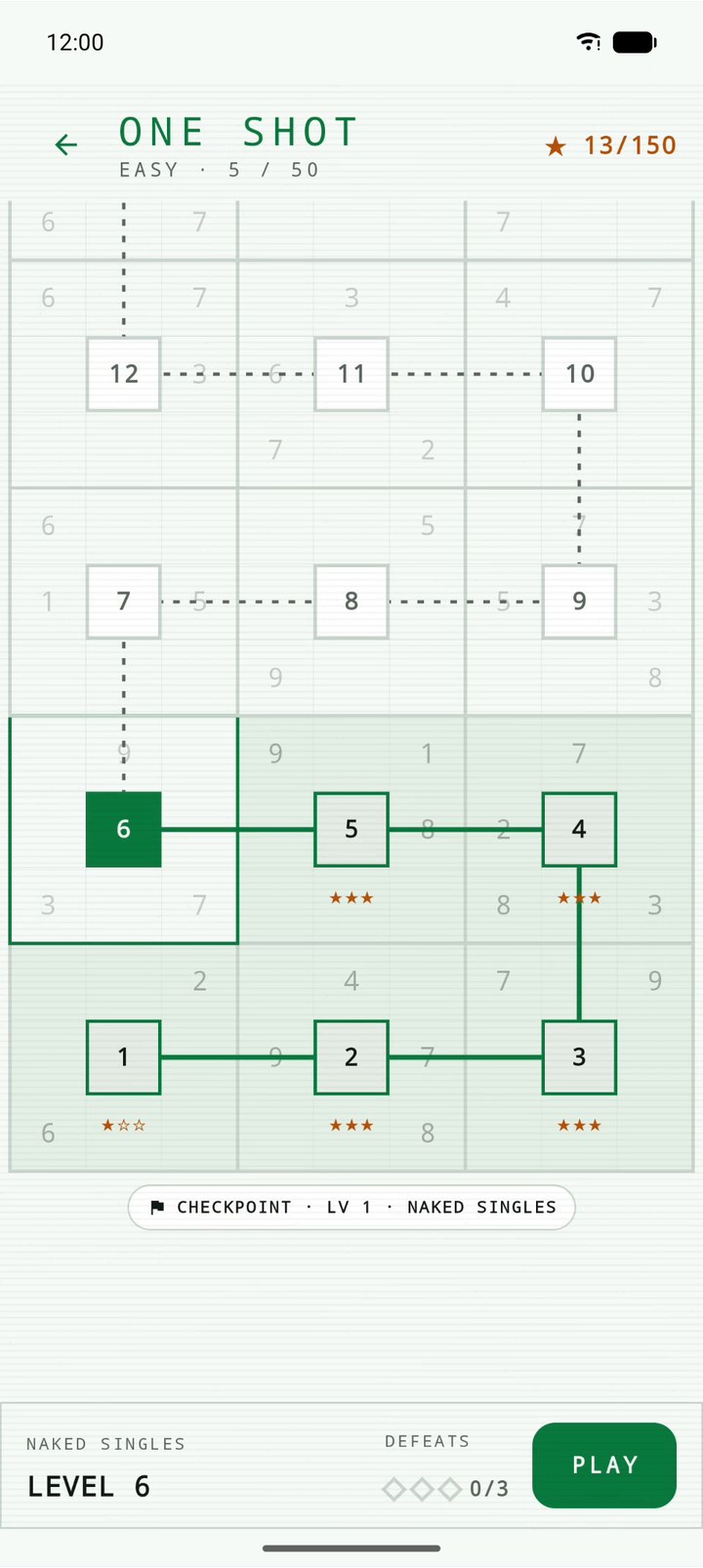
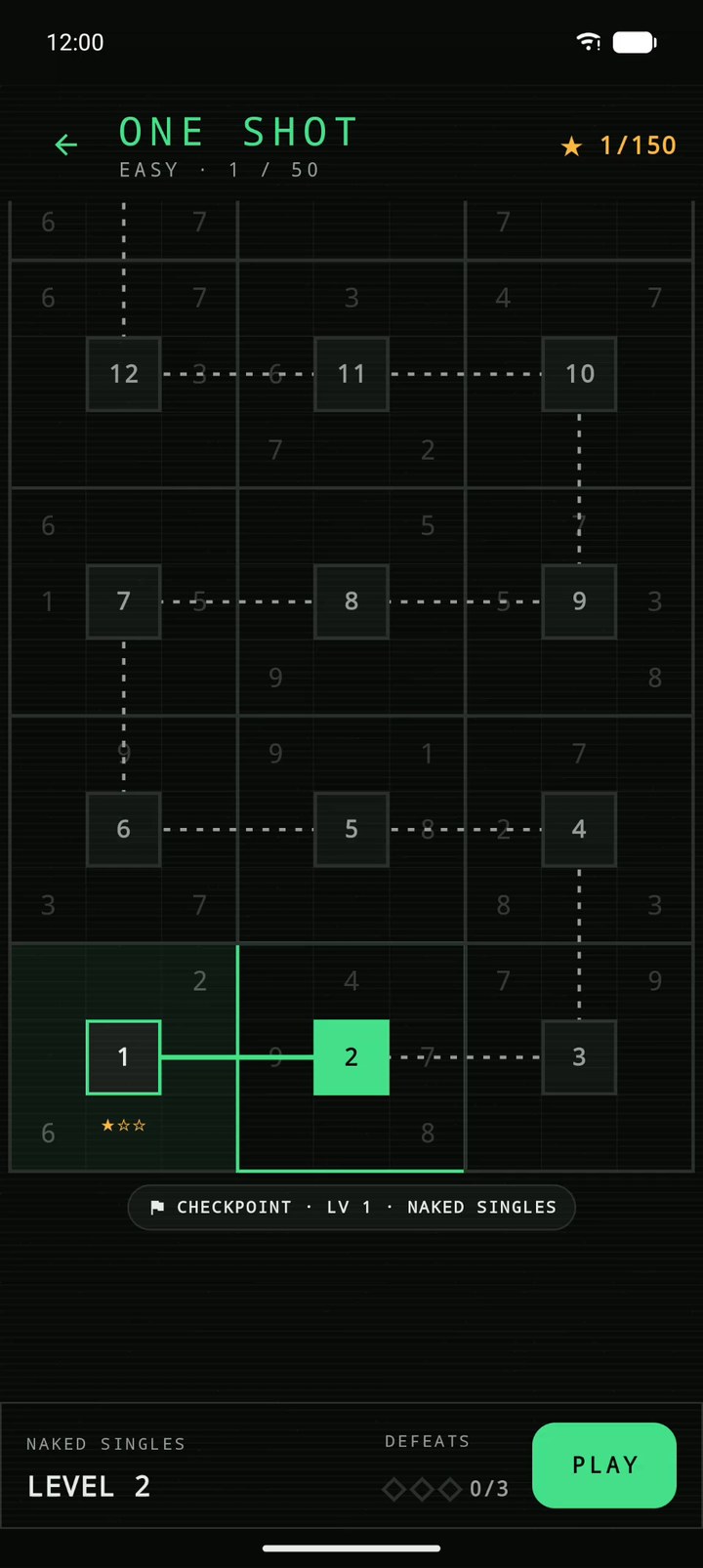
Each difficulty is a map of fifty levels, drawn as one big sudoku board, with a 3×3 box for each level. PLAY deals the next level you haven’t cleared, and every play deals a new board, so you never see the same one twice. Tap a level to see what it brings: the board size, the technique it needs, the time limit and the star targets.
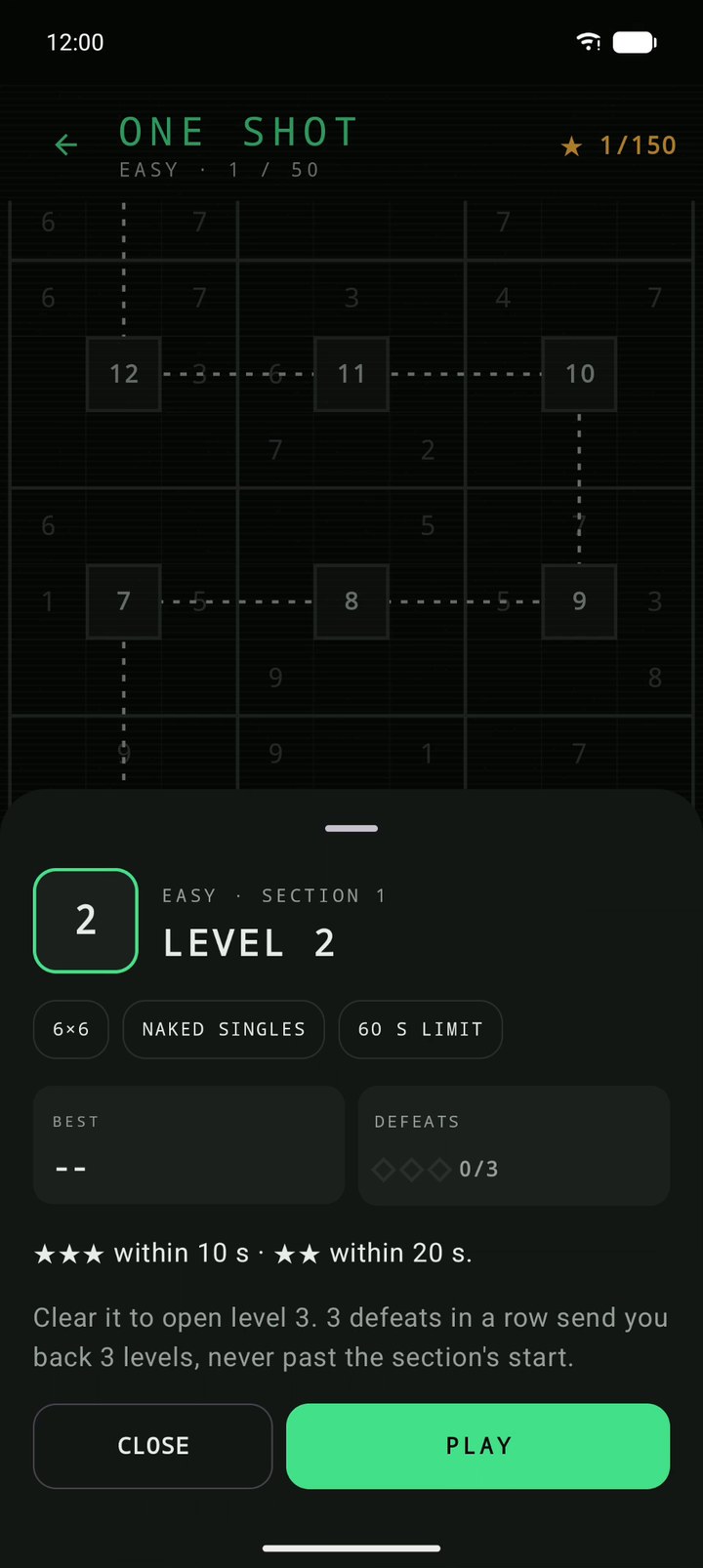
The map works as a learning path. Each new thing a difficulty introduces starts a section of its own, and the section’s first level is a checkpoint:
- Easy starts with 6×6 boards and naked singles, then moves on to 9×9.
- Medium brings hidden singles, then variant clues: Even/Odd and Greater-than.
- Hard brings pointing pairs and box/line reduction, Killer cages, naked and hidden pairs, Kropki dots, and then triples and X-Wing.
- Expert brings XY-Wing, then colouring and chains.
Easy and Medium are open from the start. Clear ten levels in a difficulty to open the next one.
Defeats and checkpoints
Losing a board on your next level counts as a defeat. Three defeats in a row push you back three levels, but never past the section’s checkpoint, so nothing a section has unlocked is ever taken away. Clearing a level resets the count, and replaying a level you have already cleared costs nothing.
Finish all fifty levels and Overtime opens: endless boards from across the whole map, with stars that keep adding up and no defeats at all.
Challenge a friend
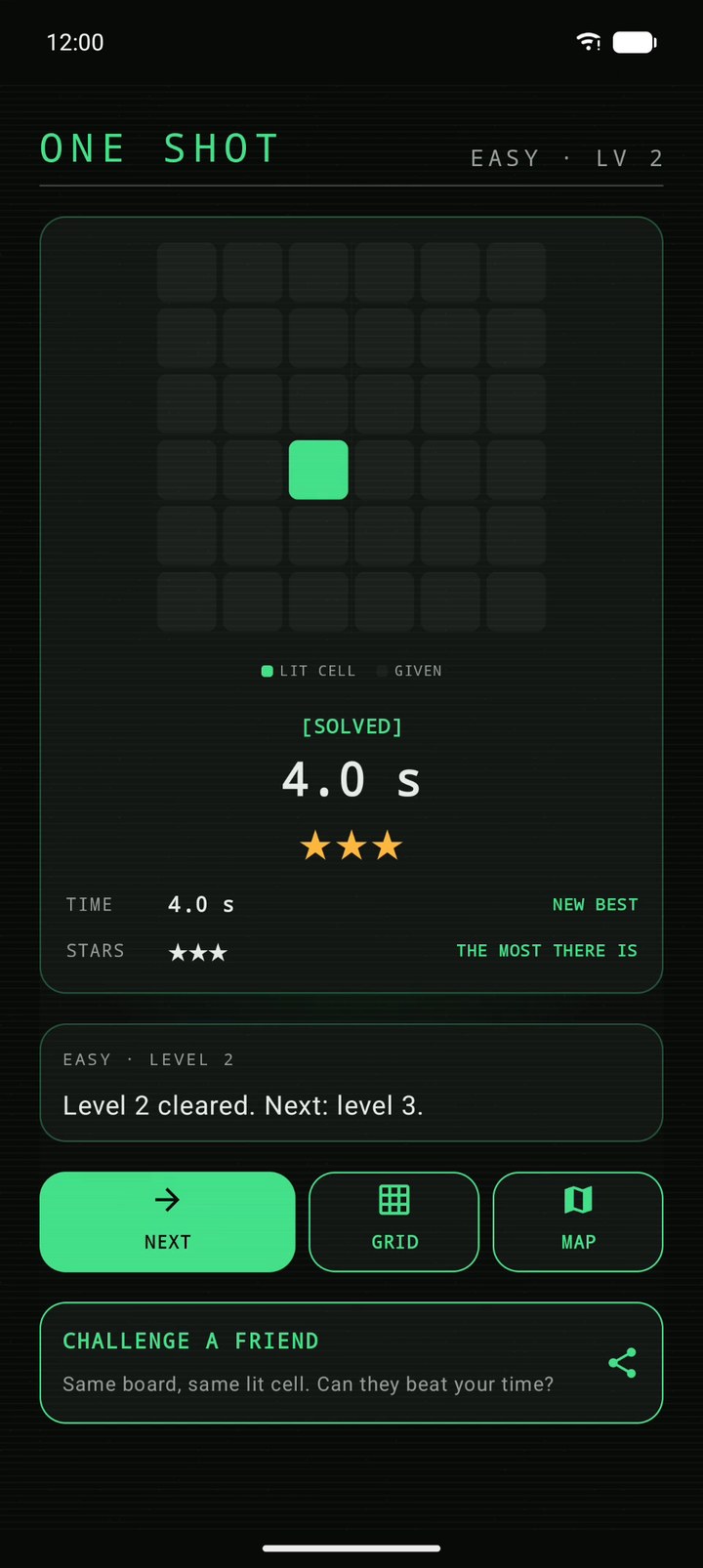
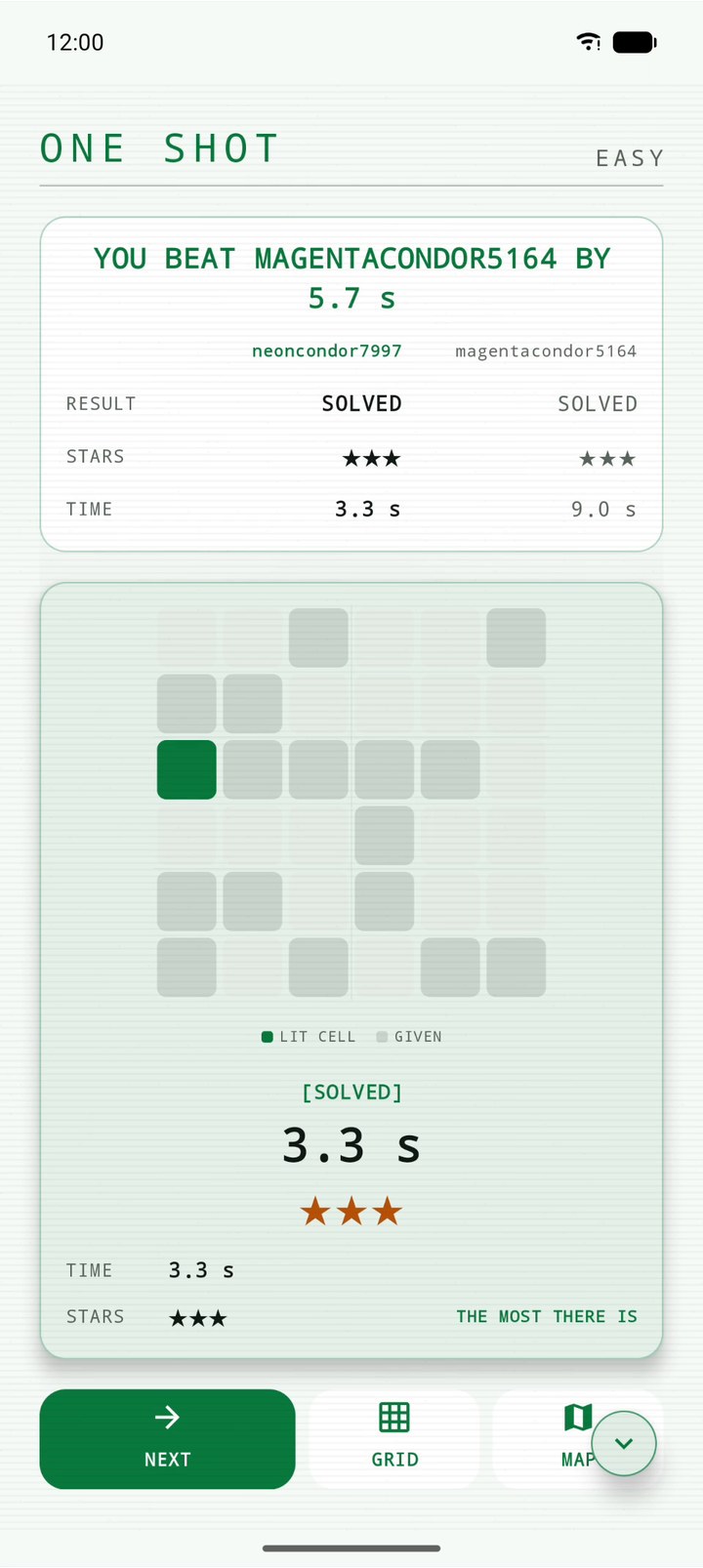
Any One Shot board can be sent as a challenge. Your friend gets the same board with the same lit cell, and your time to beat. When they finish, you both see a head-to-head result, and they can send theirs straight back.
Mission Records keeps track of how you are doing in One Shot on each difficulty: how many boards you have played, how many you have solved, your three-star count and your average time.
Why a one-move puzzle?
A full sudoku asks for twenty minutes and a long chain of steps. One Shot isolates a single step. Each board is built so that the lit cell can be found by one technique, or one technique plus one variant clue. That makes it a quick break, and also a way of practising a technique until you can spot it in a second. When a full board needs that step in a timed run, you will see it straight away.


Glitchoku is fully offline, with no ads and no sign-up. Read more in our launch post, or see the timed modes: Glitchoku Overclock and Glitchoku Blitz.