
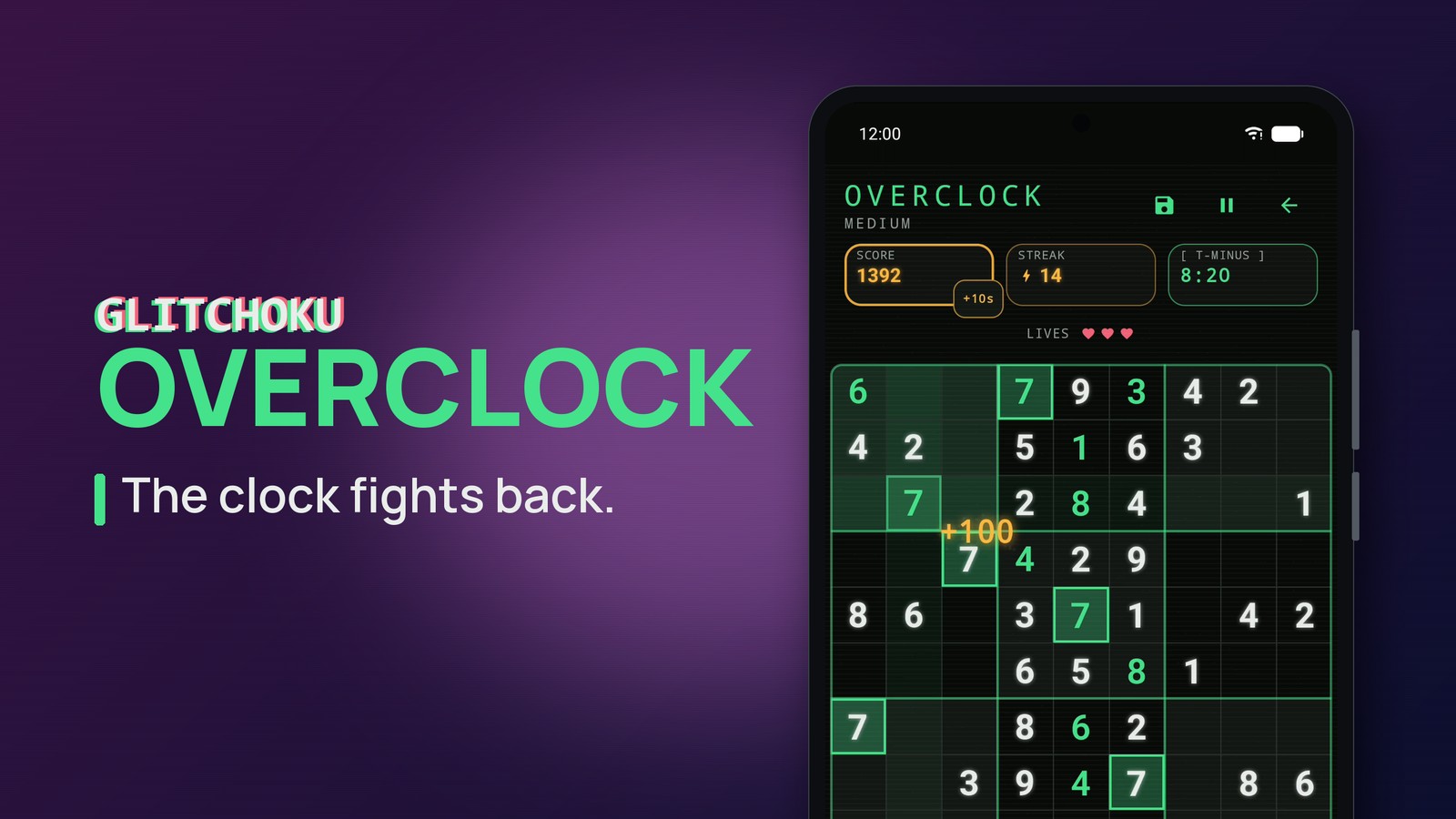
Most timed sudoku games give you a clock and let it run down. Overclock gives you a clock that you can push back up.
It is one of the ways to play Glitchoku, our sudoku game for Android. The board is ordinary 9×9 sudoku with one solution, worked out by logic alone. What changes is the clock: there is one for the whole board, it is already running when the board appears, and every correct digit buys time back.
One clock, already running
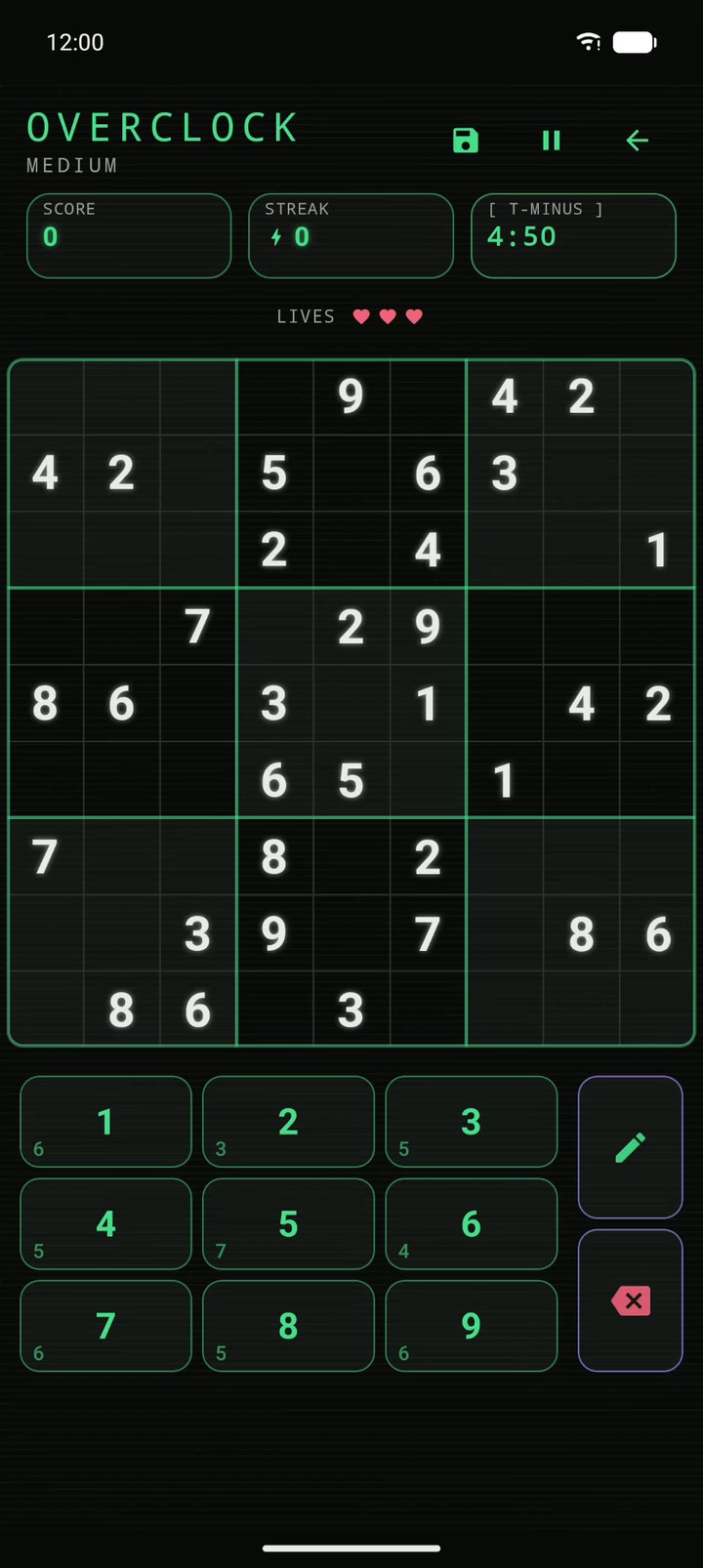
A run starts with five minutes on the clock and it never resets. There is no separate timer per move. If the clock reaches zero, the run is over.
Every correct digit buys time back
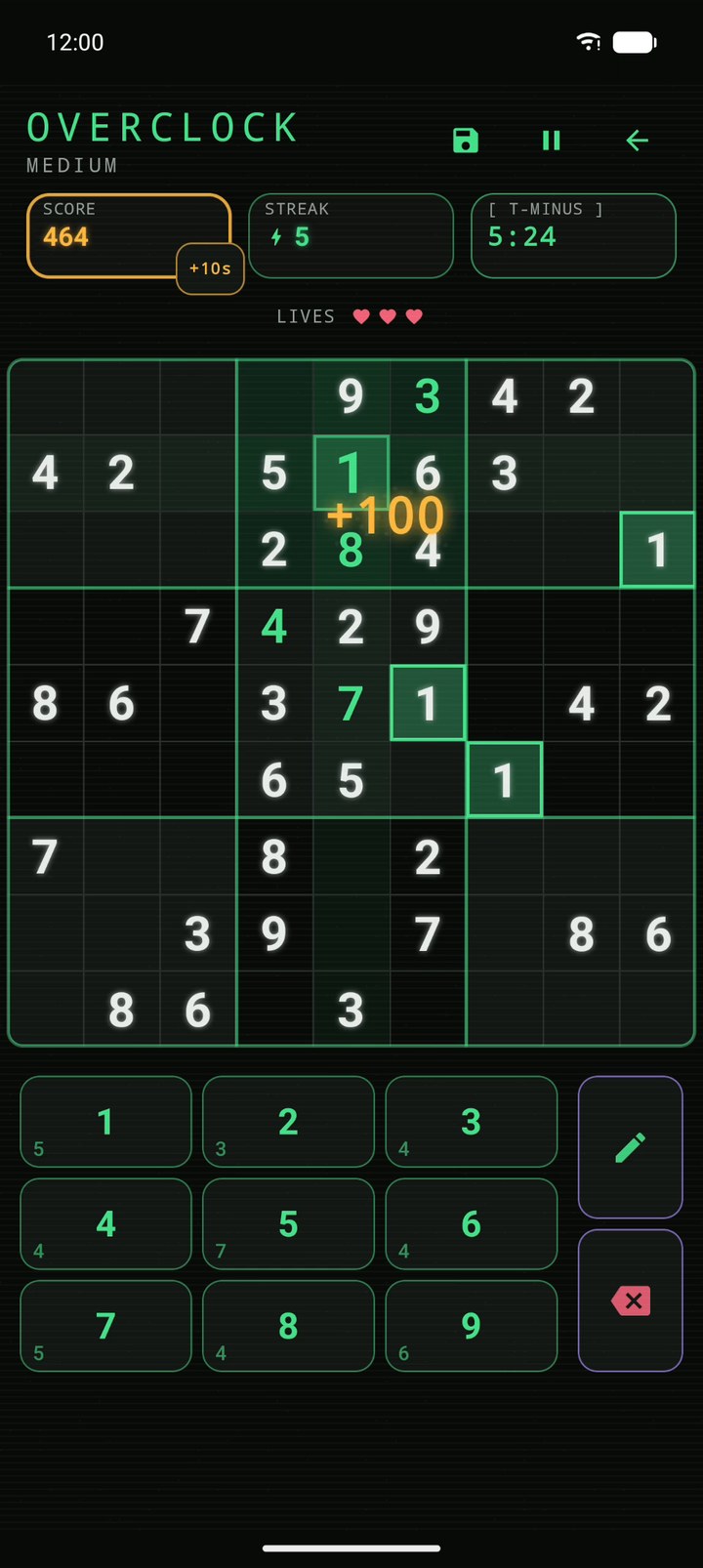
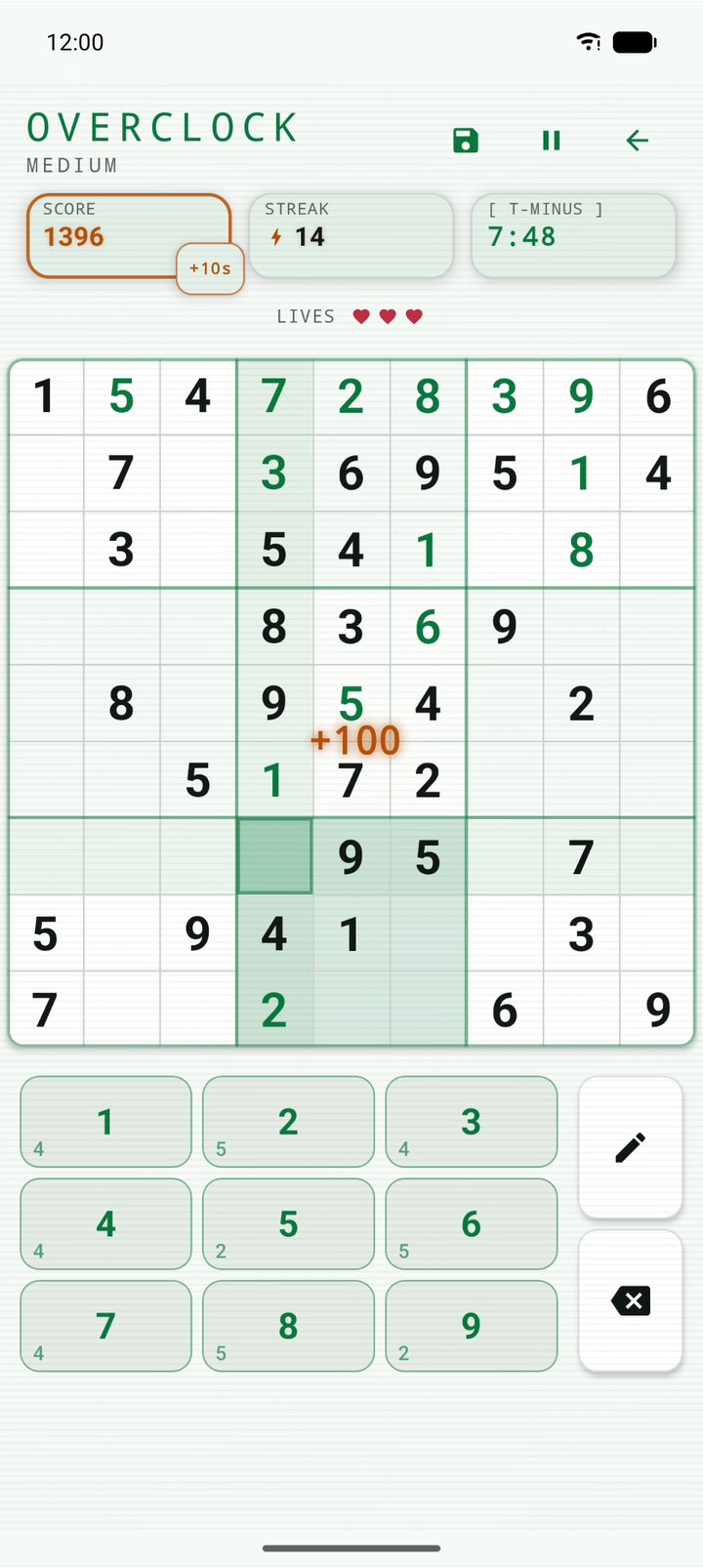
Each correct digit adds time to the clock, between 5 and 10 seconds. How much depends on your pace over the last 90 seconds of play. At 4 seconds a cell or quicker, a digit is worth the full 10 seconds. At 14 seconds a cell or slower, it is worth 5.
The point where you break even is 8 seconds a cell. Solve faster than that and the clock climbs while you play. Solve slower and it drains, and you are living off what you have in hand. The clock has no ceiling, so a quick run can finish with far more time than it started with.
Because pace is measured over a rolling window of time, saving up answers you already know and entering them in one burst doesn’t pay any extra. Steady solving does.
Finish a box for a refill
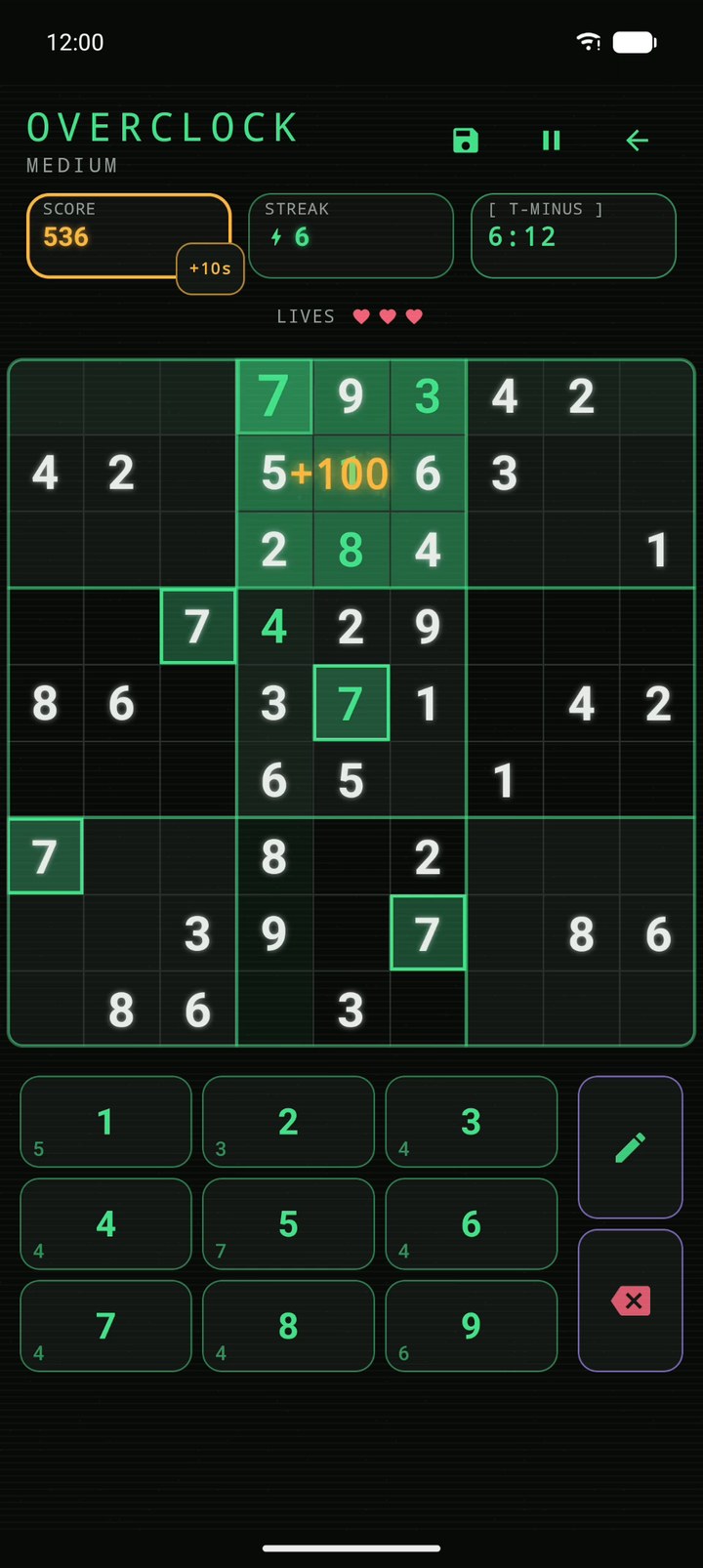
Completing a 3×3 box adds a lump of time on top. The first box you finish is worth 40 seconds, the next 35, and so on down by five. So there is a choice to make early in a run: finish boxes quickly for the big refills, or work wherever the logic is easiest.
Three lives
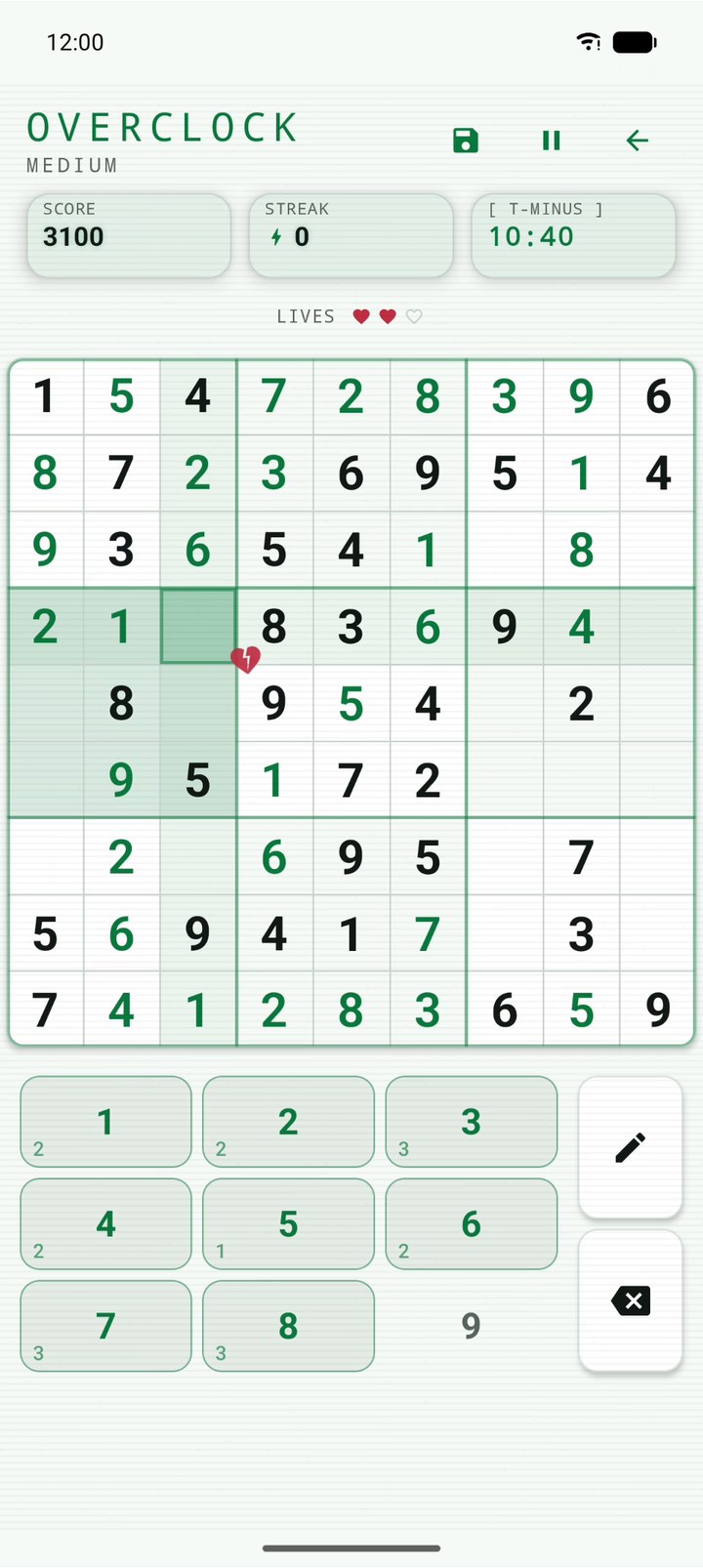
A wrong digit costs no points, but it costs a life and 20 seconds off the clock. You get three lives, and the third wrong digit ends the run. On Expert you get two.
How Overclock scores a run
Your score comes from two places:
- Board recovery: 100 points for every correct digit.
- Time bonus: 25 points for every second left on the clock when you finish.
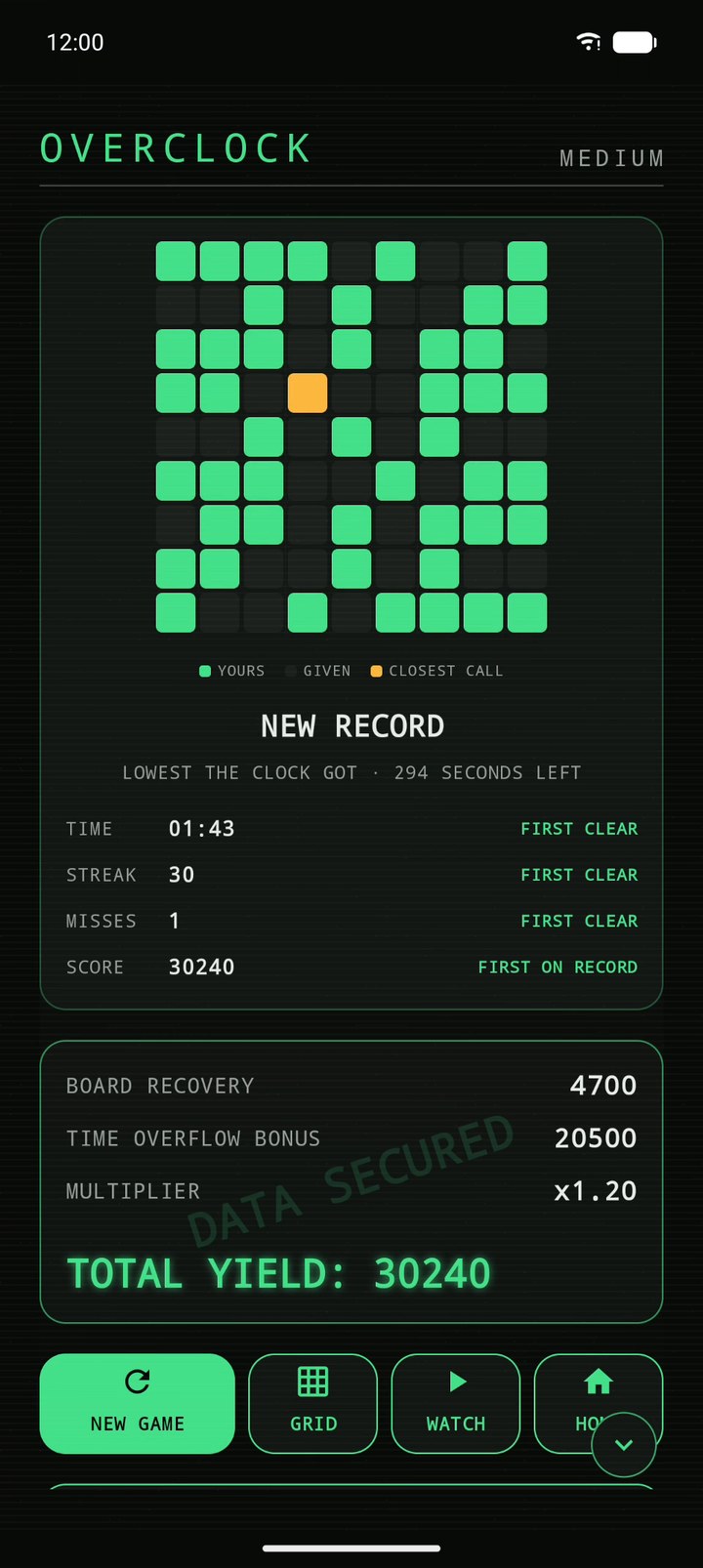
Both are then multiplied by how many hearts you kept: ×1.35 with all three, ×1.20 with two, and ×1.00 with one. The multiplier only applies to a finished board. If the clock runs out or you lose your last life, you keep the points you earned and get no multiplier.
The time bonus is usually the bigger part, so speed is what moves your score most. In the run below, 4,700 points came from the board and 20,500 from the time left, and keeping two hearts made the total 30,240.
A few tips
- Find your rhythm early. The first minute sets your pace, and pace decides how much each digit is worth.
- Take the easy singles first. A quick digit buys more time than a slow one, so clear the obvious cells before you settle into the hard part of the board.
- Look for boxes close to finished. The first refills are the biggest.
- Don’t guess. A wrong digit costs 20 seconds and a heart. A few extra seconds of thinking almost always costs less.
Every difficulty, and a record for each
Overclock runs on all four Glitchoku difficulties: Easy, Medium, Hard and Expert. Each tier is set by the solving techniques a board really needs, not by how many digits it gives you. Expert stays locked until you have finished three Hard boards in Overclock. Your best runs are kept per difficulty in Mission Records, with a move-by-move replay of every one.
If you want sudoku with something at stake, this is the mode for you.


Glitchoku is fully offline, with no ads and no sign-up. Read more in our launch post, or see the other modes: Glitchoku Blitz and One Shot.